
Better known for his famous Natural History of Selbourne, the genial Hampshire clergyman Gilbert White also kept a Garden Kalendar (published by The Scholar Press, 1975).
Two hundred and seventy years on, I’m following in his horticultural footsteps on my allotment, Plot 55. I’m starting as he did on a cold day in February with a cloche.

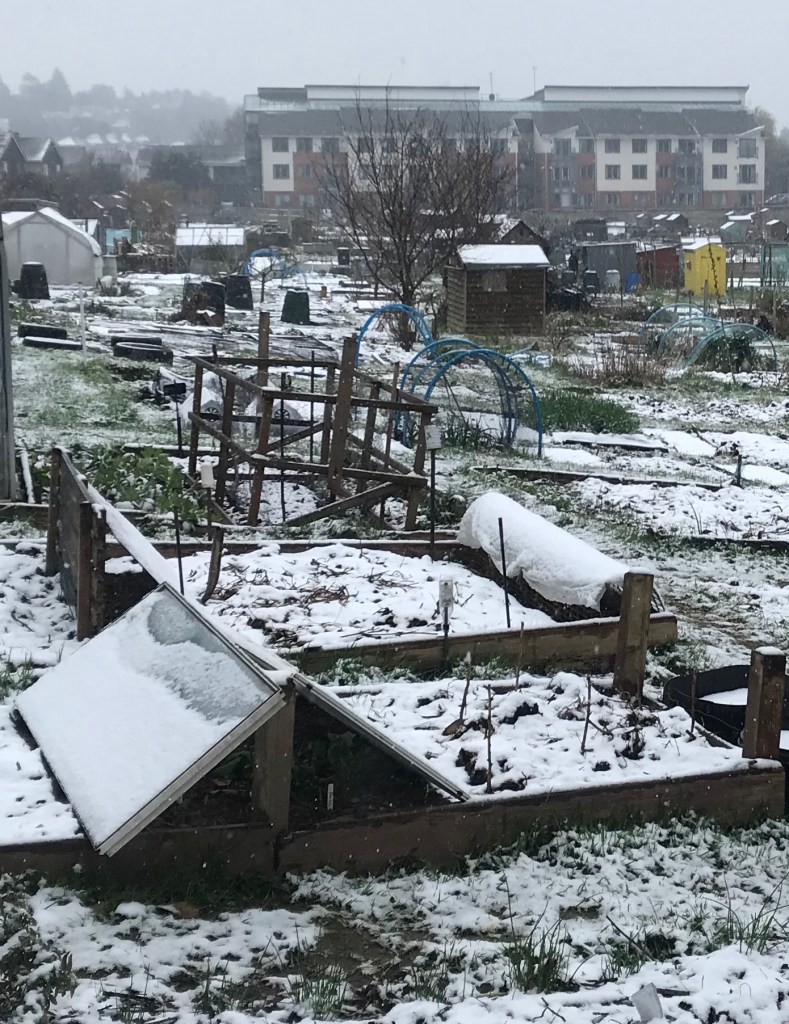
My frames are made (two caravan windows for one; wire hoops covered with fleece for another), but I’m short of manure heat. The perpetual cry of anguish from my neighbours is: “Where can I find manure?” There’s rumoured to be a load of composted restaurant kitchen waste being delivered by the local cycle cargo company. No sign yet.
Cloches versus Adolph Hitler
During World War II as the German army prepared to occupy Britain, the appropriately named Charles Wyse-Gardner advocated the use of the glass cloche to help halt its advance. “It is a commonplace,” he wrote in the third edition of his booklet Cloches versus Hitler, (1941) “that the battle of the Atlantic is being fought not only on the sea and in the air, but also on land in every garden and allotment in the country.”
Since the US’ lease-lend Liberty ships were being employed to send troops and armaments rather than food to Britain, everyone back home was trying to grow as many vegetables they could. “Cloches are not luxuries,” wrote Wyse-Gardner, “but rank with seeds, manures and garden tools, as part of the equipment essential for successful all-the-year-round vegetable growing.”
He was right of course. We learn from history: young plants at the start of the growing season, and plants still ripening at the end, are vulnerable to the cold and a cloche or a cloche tunnel prolongs the growing period, creating a modestly warmer micro climate for the plants.
 Bill Laws